
TL;DR
Every significant decision begins long before the moment we choose. It begins with how we observe, interpret, question, and understand what is happening. This article introduces Before You Decide not as a slogan or decision-making formula, but as the guiding discipline behind this publication. It argues that poor decisions often stem from incomplete understanding rather than poor intentions, and that responsible judgment requires curiosity, context, and thoughtful reflection. Whether the subject is business, leadership, marketing, relationships, or everyday life, the same principle applies: resist the temptation to react to first impressions. Instead, seek a deeper understanding before reaching conclusions. The ideas introduced here form the intellectual foundation for every article that follows.
Opening & Foundation
Every day, we make decisions.
Some are so ordinary that we barely notice them. Others quietly influence the direction of our careers, businesses, relationships, and lives for years to come.
We decide which opportunities to pursue, which advice to follow, which people to trust, which strategies to invest in, and which problems deserve our attention. We make judgments about situations we do not fully understand. We interpret conversations, evaluate risks, and choose a direction long before every fact is available.
Decision-making is not a special event reserved for executives or business leaders. It is one of the few responsibilities every person carries, regardless of their profession, experience, or position.
Everyday Decisions vs Thoughtful Decisions
| Everyday Decision | Thoughtful Decision |
|---|---|
| Quick reaction | Intentional judgment |
| Based on assumptions | Based on understanding |
| Emotion-driven | Context-aware |
| Immediate comfort | Long-term consequence |
| Surface observation | Deeper investigation |
Yet despite how frequently we make decisions, very few of us are taught how to think before making them.
-
We are taught to act quickly.
-
We are rewarded for having answers.
-
We are encouraged to appear certain.
But certainty is not always wisdom.
Confidence is not always understanding.
And speed is not always progress.
🔎 Key Insight
Fast decisions are not necessarily better decisions. The quality of a decision depends more on the quality of understanding than on the speed of action.
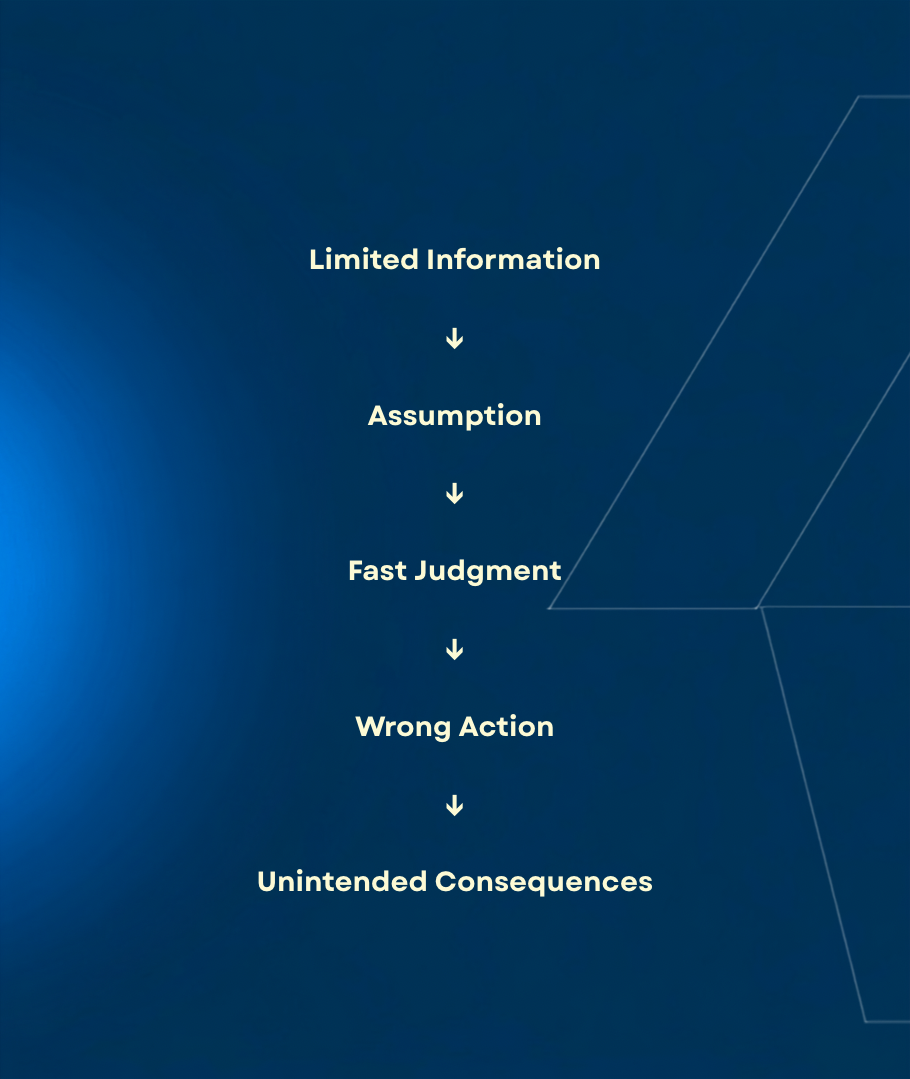
Many poor decisions do not begin with bad intentions. They begin with incomplete understanding.
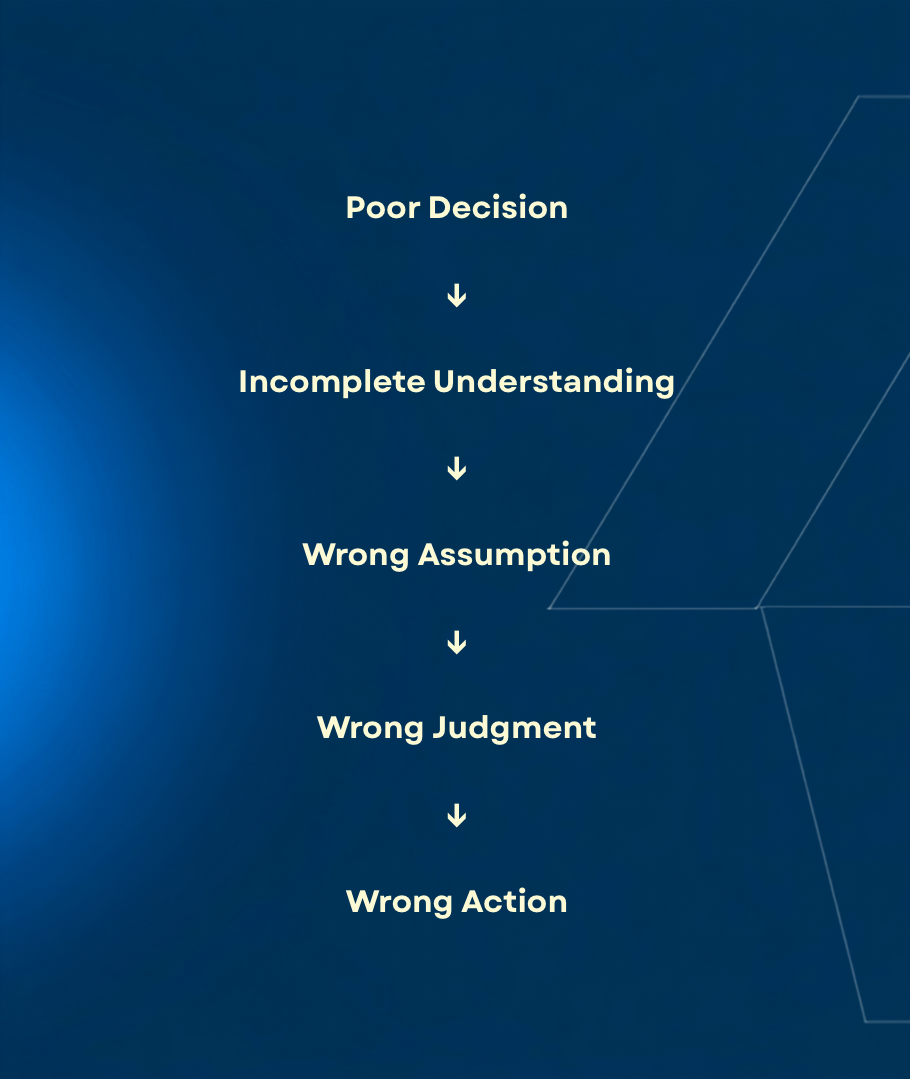
Sometimes we confuse assumptions with evidence.
Sometimes we react before we observe.
Sometimes we accept the first explanation because it feels comfortable, familiar, or emotionally satisfying.
Sometimes we become so focused on finding an answer that we stop asking whether we are asking the right question.
Common Causes of Poor Decisions
| Cause | What Happens |
|---|---|
| Assumption | We treat an untested belief as evidence |
| Premature reaction | We respond before observing carefully |
| Familiar explanation | We accept what feels comfortable |
| Emotional influence | Feelings shape interpretation before facts are examined |
| Wrong question | We solve the wrong issue |
| Missing context | We judge one part without understanding the whole |
The consequences are rarely immediate.
Instead, they accumulate quietly.
-
A business invests in the wrong strategy because it misunderstood the market.
-
A leader damages trust because they judged people before understanding the situation.
-
A marketer solves the wrong problem because they relied on assumptions instead of customer reality.
-
A professional misses an important opportunity because they accepted conventional thinking without questioning it.
Most costly mistakes are not failures of intelligence.
They are failures of perspective.
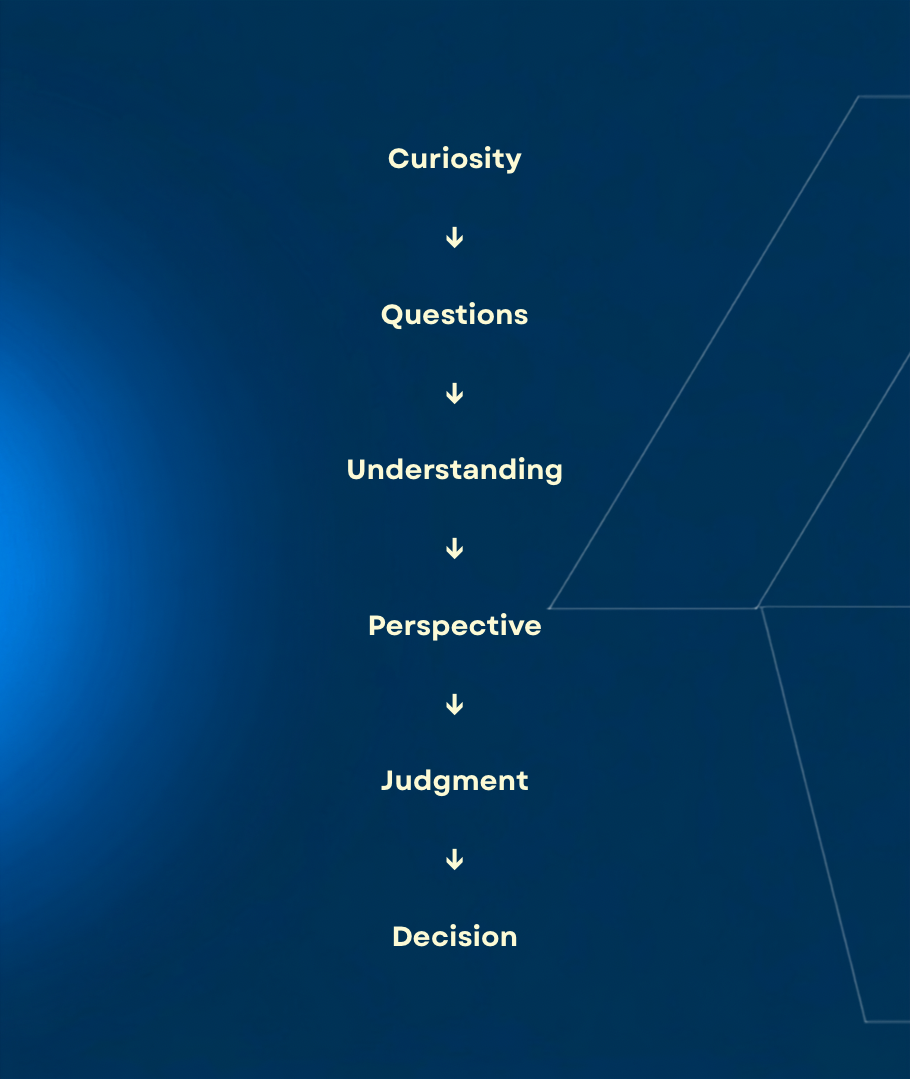
Over the years, working across marketing, business, leadership, and organizational decision-making, I have noticed something that continues to repeat itself.
The people who consistently make better decisions are not necessarily the smartest people in the room.
-
They are usually the ones who spend more time understanding before deciding.
-
They ask better questions.
-
They observe more carefully.
-
They recognize uncertainty instead of pretending it does not exist.
They resist the temptation to rush toward simple answers for complex situations.
Most importantly, they understand that every decision is made within a context, and without understanding that context, even the most logical conclusion can lead in the wrong direction.
That observation gradually became something more than a professional habit.
It became a personal philosophy.
A way of approaching work.
A way of approaching people.
A way of approaching problems.
Eventually, it became the idea that sits at the center of everything I write, teach, and practice.
Before You Decide.
Many people first encounter these words as the title of my website or as a phrase that appears alongside my work.
Some assume it is a slogan.
Others think it encourages hesitation or endless analysis.
Some interpret it as advice to be more careful.
While those interpretations are understandable, they only touch the surface.
Before You Decide is not about delaying decisions.
It is not about avoiding risk.
It is not about waiting until everything becomes certain.
And it is certainly not about believing that perfect information exists.
Life does not offer complete certainty.
Business does not pause until every answer is available.
Leadership rarely provides ideal conditions.
Meaningful decisions often have to be made while information is incomplete and circumstances continue to change.
The goal, therefore, is not to eliminate uncertainty.
The goal is to improve the quality of our thinking within uncertainty.
That is what Before You Decide represents.
It is a reminder to pause—not because action is dangerous, but because understanding deserves a moment before judgment takes over.
It is an invitation to look beyond first impressions.
-
To separate observation from assumption.
-
To understand people before evaluating them.
-
To understand systems before trying to fix them.
-
To understand problems before proposing solutions.
-
To understand consequences before making commitments.
In many situations, that brief pause changes everything.
-
It allows emotion to settle.
-
It exposes hidden assumptions.
-
It reveals missing information.
-
It encourages better questions.
And often, it leads to a completely different decision than the one we would have made only moments earlier.
This philosophy does not promise perfect decisions.
No philosophy can.
Every meaningful decision involves uncertainty, trade-offs, and the possibility of being wrong.
The objective is not perfection.
The objective is to make decisions that are more thoughtful, more responsible, and better informed than they would have been otherwise.
Because good judgment is rarely about knowing everything.
It is about respecting everything we do not yet know.
That belief shapes every article in this publication.
Whether the subject is marketing, branding, leadership, business, communication, organizational culture, or personal growth, the purpose is never simply to provide answers.
It is to encourage clearer thinking.
To examine assumptions.
To explore complexity without making it unnecessarily complicated.
To help readers develop the judgment needed to navigate situations where there are no perfect answers—only better ways of thinking.
If this publication has one purpose, it is this:
Not to tell you what to think.
But to help you think more clearly before you decide.
The Philosophy
Every philosophy begins with a simple belief.
The philosophy behind Before You Decide begins with this one:
Understanding should always come before judgment.
It sounds obvious.
Yet in practice, it is surprisingly uncommon.
We live in an environment that rewards immediate opinions. Social media encourages instant reactions. News cycles compress complex events into headlines. Meetings often value quick answers over thoughtful questions. Businesses celebrate speed, and people are frequently expected to have a position before they have had time to understand the situation.
As a result, we often mistake fast thinking for good thinking.
But they are not the same.
There are moments when speed matters. Emergencies demand decisive action. Experience sometimes allows us to recognize familiar patterns quickly.
However, many of the decisions that shape businesses, careers, relationships, and organizations are not emergencies.
They are judgment calls.
And judgment deserves understanding.
That is why Before You Decide is not a productivity principle.
It is a discipline of thinking.
It asks us to resist one natural human tendency: the desire to reach conclusions before we have earned them.
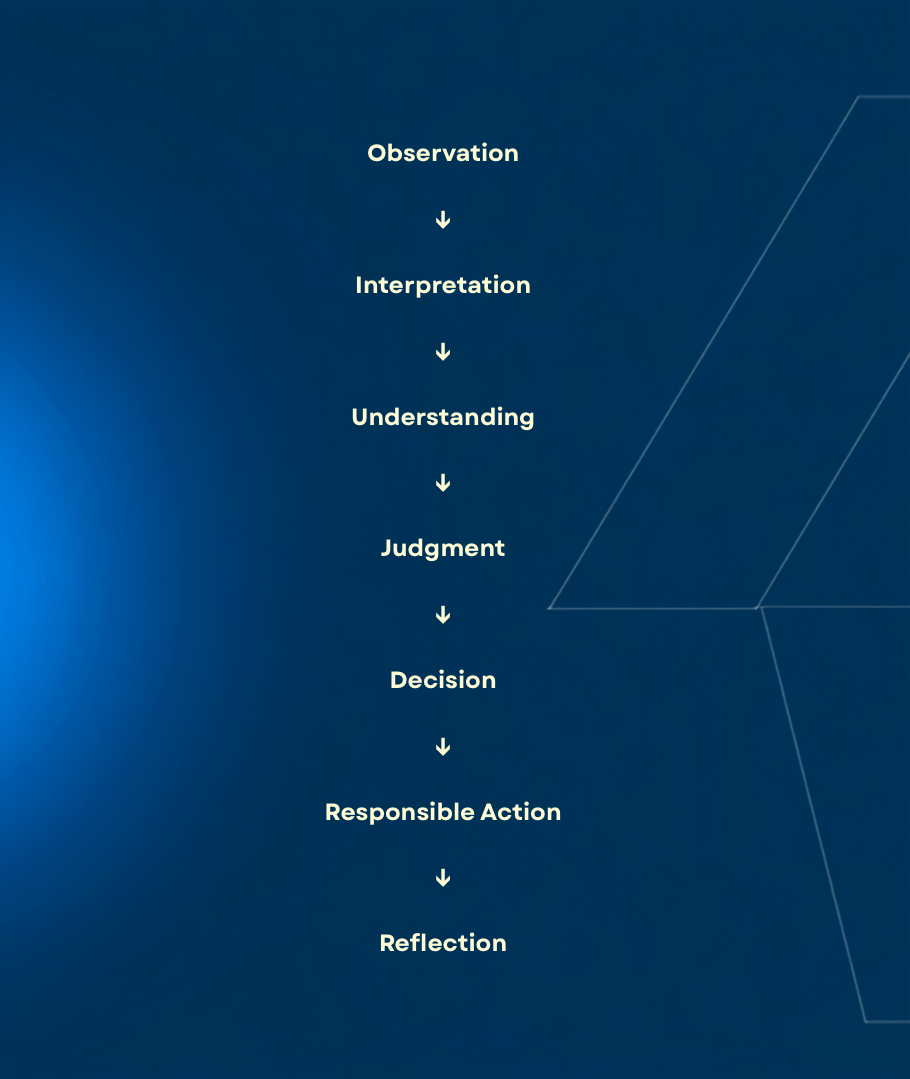
The Before You Decide Philosophy
| Stage | Central Question | Purpose |
|---|---|---|
| Observation | What am I actually seeing? | Separate reality from immediate interpretation |
| Interpretation | What meaning am I assigning? | Expose assumptions |
| Understanding | What context matters? | Build a fuller view |
| Judgment | What conclusion is justified? | Evaluate choices responsibly |
| Decision | What choice should be made? | Reach a clear position |
| Responsible Action | What must happen next? | Convert thought into movement |
| Reflection | What should be learned? | Improve future judgment |
Observation Before Assumption
Every decision begins with information.
The quality of that information determines the quality of the decision.
Yet our minds naturally fill gaps with assumptions.
-
When a project fails, we assume someone was careless.
-
When a colleague is quiet, we assume they are disengaged.
-
When a marketing campaign performs poorly, we blame the creative work.
-
When a customer chooses a competitor, we assume price was the deciding factor.
Sometimes those assumptions are correct.
Many times they are not.
The problem is not that assumptions exist.
The problem is that assumptions often disguise themselves as facts.
Observation is different.
Observation asks:
-
What do I actually know?
-
What have I personally verified?
-
What evidence supports this conclusion?
-
What information is still missing?
These questions slow the mind just enough to separate reality from interpretation.
That separation is one of the most valuable habits a decision-maker can develop.
Context Before Conclusion
Facts rarely exist in isolation.
Every decision happens within a wider context.
A declining business may not have a marketing problem.
It may have ...
-
a product problem.
-
Or a pricing problem.
-
Or an operational problem.
-
Or a leadership problem.
Similarly, an employee's performance cannot always be explained by motivation alone.
The issue may involve unclear expectations, inadequate systems, conflicting priorities, or personal circumstances invisible to everyone else.
Without context, we risk solving symptoms while leaving the real problem untouched.
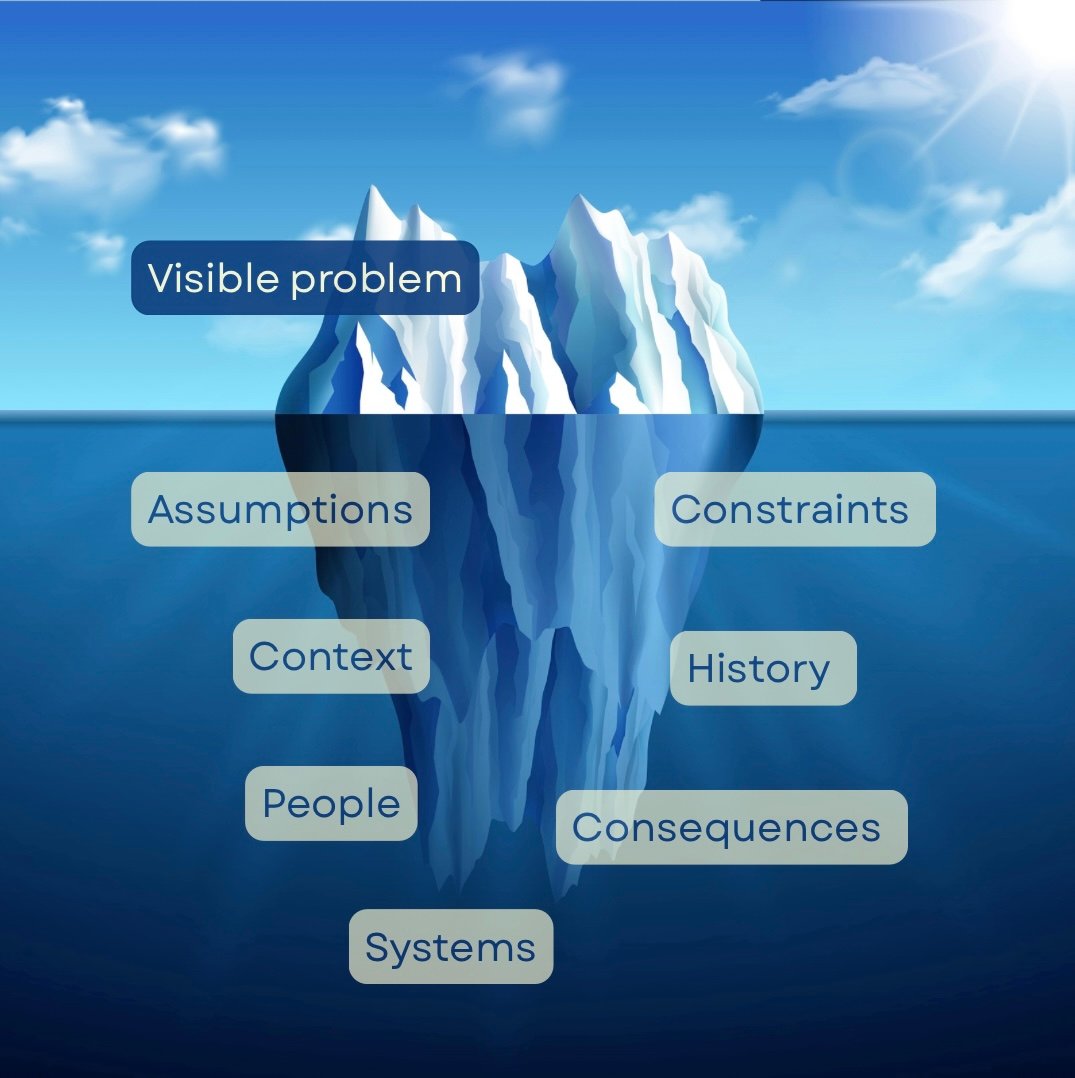
Good judgment requires seeing the system rather than only the event.
This is one reason simple answers often fail in complex situations.
Reality is interconnected.
Understanding those connections changes the decisions we make.
Curiosity Before Certainty
One of the greatest obstacles to good judgment is the illusion of certainty.
The more convinced we become that we already know the answer, the less likely we are to discover something new.
Curiosity interrupts that pattern.
Instead of defending our existing beliefs, curiosity asks:
-
What am I missing?
-
Why might someone else see this differently?
-
Which assumption deserves to be challenged?
-
What would change my mind?
These questions are not signs of weakness.
They are signs of intellectual maturity.
The strongest leaders are rarely those who always have the fastest answers.
They are often the ones willing to explore better questions.
Principles Before Preferences
Many decisions become difficult because we confuse personal preference with sound judgment.
-
We choose familiar ideas because they are comfortable.
-
We defend existing methods because they worked before.
-
We reject unfamiliar perspectives because they challenge our identity.
Good thinking requires a higher standard.
Instead of asking,
"What do I prefer?"
we begin asking,
"What principle should guide this decision?"
Principles remain valuable even when circumstances change.
They provide consistency when emotions fluctuate.
They help us make decisions we can explain, defend, and learn from long after the immediate pressure has passed.
Trade-offs Before Perfection
Many people postpone decisions while searching for the perfect option.
Unfortunately, perfection is rarely available.
Every meaningful decision involves trade-offs.
Choosing one opportunity means declining another.
Growing a business may require short-term discomfort.
Protecting quality may reduce speed.
Expanding quickly may increase risk.
Leadership often requires balancing competing priorities rather than maximizing every outcome simultaneously.
Recognizing trade-offs does not make decisions easier.
It makes them more honest.
Wise decision-makers do not pretend that difficult choices have perfect solutions.
They accept that every choice carries both benefits and consequences.
Their responsibility is not to eliminate those consequences.
It is to understand them before moving forward.
Reflection Before Repetition
Every decision creates an opportunity to learn.
Unfortunately, many people only evaluate outcomes.
Few evaluate their thinking.
When a decision succeeds, we congratulate ourselves.
When it fails, we search for someone to blame.
Both reactions miss a deeper question.
-
How did I arrive at this decision?
-
Was the reasoning sound?
-
Was the evidence sufficient?
-
Did I allow emotion to dominate judgment?
-
Did I ignore conflicting information?
Would I make the same decision again, knowing what I knew at that time?
Reflection transforms experience into wisdom.
Without reflection, experience simply becomes repetition.
A Philosophy for Everyday Decisions
This philosophy is not reserved for boardrooms or executive meetings.
It applies...
-
To conversations with colleagues.
-
To hiring decisions.
-
To marketing strategies.
-
To customer relationships.
-
To disagreements.
-
To opportunities that appear attractive on the surface.
-
To moments when emotions run high.
-
To situations where everyone seems certain.
In each of these moments, Before You Decide serves as a quiet reminder.
-
Pause.
-
Observe carefully.
-
Seek context.
-
Question assumptions.
-
Stay curious.
-
Respect uncertainty.
-
Accept trade-offs.
-
Reflect honestly.
-
Only then decide.
Not because slower thinking is always better.
But because thoughtful thinking is almost always wiser.
This is the philosophy that guides every article in this publication.
It is not a promise that every decision will be correct.
It is a commitment that every decision deserves our best thinking.
And in a world that constantly encourages us to react faster, that commitment may be one of the most valuable professional habits we can develop.
The Practice
A philosophy has little value if it exists only as an idea.
Its real worth is measured by how it changes the way we act.
The philosophy of Before You Decide is not something I reserve for writing or teaching. It shapes how I approach my work, how I evaluate situations, how I lead conversations, and how I make decisions when the answer is not immediately obvious.
It is not a checklist.
It is not a rigid framework.
It is a way of thinking that can be applied across different situations while respecting that every context is unique.
Whether you are building a business, leading a team, creating a marketing strategy, or navigating a personal challenge, the principle remains the same:
Understand first. Decide second.
The practice may look different, but the discipline is always the same.
In Business: Solving the Right Problem
Businesses often move quickly.
Revenue targets create pressure.
Competition demands action.
Customers expect immediate responses.
In that environment, the temptation is to solve whatever problem appears most visible.
-
Sales decline, so the company increases advertising.
-
Customer complaints rise, so management changes the support team.
-
Growth slows, so new products are launched.
Sometimes these actions help.
Sometimes they only treat symptoms while the underlying problem continues to grow.
A business rarely struggles because of a single isolated issue.
-
Marketing affects sales.
-
Sales influence customer expectations.
-
Operations shape customer experience.
-
Leadership determines culture.
-
Culture influences execution.
-
Execution affects reputation.
Every part of an organization is connected.
Good decisions begin by understanding those connections instead of assuming the first visible problem is the real one.
Before deciding what to change, ask:
- What evidence supports this conclusion?
- What problem are we actually trying to solve?
- What is causing this issue—not just what is happening?
- If we solve today's symptom, what remains unresolved?
The quality of business decisions often depends less on finding answers and more on identifying the right questions.
In Leadership: Understanding Before Evaluating
Leadership is not simply making decisions.
It is making decisions that affect people.
That responsibility demands more than authority.
It requires understanding.
When performance declines, many leaders immediately evaluate the individual.
But performance rarely exists in isolation.
A missed deadline may reflect unclear expectations rather than poor commitment.
A disengaged employee may be experiencing confusion instead of laziness.
Repeated mistakes may reveal weaknesses in the system rather than weaknesses in the person.
Effective leaders resist judging people based only on visible outcomes.
Instead, they seek to understand the environment that produced those outcomes.
This does not mean avoiding accountability.
It means ensuring accountability is based on reality rather than assumption.
People deserve to be understood before they are evaluated.
And organizations become stronger when leaders solve causes instead of assigning blame.
In Marketing: Seeing Through the Customer's Eyes
Marketing is often misunderstood as the art of persuasion.
I believe it begins with understanding.
Many campaigns fail because businesses focus on what they want to say instead of what customers need to understand.
-
They describe products without understanding customer uncertainty.
-
They promote features without recognizing emotional concerns.
-
They celebrate the brand without considering the customer's perspective.
Every customer decision begins long before they contact a business.
-
They compare options.
-
They evaluate risks.
-
They seek reassurance.
-
They wonder whether they can trust the people behind the brand.
If we fail to understand those questions, our marketing becomes noise rather than guidance.
Before creating messages, ask:
- What decision is the customer trying to make?
- What uncertainty prevents them from deciding?
- What evidence would increase their confidence?
- What matters most from their perspective—not ours?
The most effective marketing does not push people toward decisions.
It helps them make better ones.
In Communication: Listening Beyond Words
Most misunderstandings are not caused by poor intentions.
They are caused by incomplete understanding.
We hear words.
We assume meaning.
We respond before confirming whether our interpretation is correct.
Good communication requires patience.
Sometimes the most important part of a conversation is not what is spoken.
It is what remains unsaid.
A pause.
A hesitation.
A change in tone.
A concern someone struggles to express directly.
When we pay attention only to the surface of conversations, we respond to words.
When we seek understanding, we respond to people.
Listening is not waiting for our turn to speak.
It is creating enough space for understanding to emerge.
In Career Decisions: Looking Beyond the Opportunity
Career decisions often appear straightforward.
-
A higher salary.
-
A better title.
-
A more recognizable company.
-
A new opportunity.
These factors matter.
But they rarely tell the whole story.
A role that looks impressive may not align with your long-term direction.
An attractive offer may require compromises you have not yet considered.
A promotion may increase responsibility while reducing the work you genuinely enjoy.
Before making career decisions, look beyond immediate rewards.
Ask:
- What kind of professional am I becoming?
- What skills will this opportunity help me develop?
- What values will this environment strengthen—or weaken?
- Will this decision move me toward the person I hope to become?
A career is built through hundreds of decisions that seem small at the time.
Thoughtful choices accumulate just as quickly as careless ones.
In Everyday Life: The Small Decisions That Shape Us
Not every important decision announces itself.
Many arrive quietly.
-
How we spend an hour.
-
How we respond during disagreement.
-
Whether we choose curiosity or certainty.
-
Whether we listen or interrupt.
-
Whether we react immediately or pause for a moment.
-
These decisions rarely become headlines in our lives.
Yet together they shape our habits.
Our habits shape our character.
And our character influences every larger decision that follows.
This is why Before You Decide is not reserved for life's biggest moments.
It belongs in ordinary moments.
Because:
extraordinary judgment is usually built through ordinary practice.
A Simple Discipline
Over time, I have found myself returning to the same mental discipline whenever a meaningful decision approaches.
Not because it guarantees the right answer.
But because it helps me think more clearly.
-
I pause.
-
I observe what I know.
-
I identify what I do not know.
-
I question my assumptions.
-
I consider the wider context.
-
I listen before concluding.
-
I accept uncertainty instead of pretending it does not exist.
-
Only then do I decide.
Sometimes that process confirms my original thinking.
Sometimes it changes it completely.
Either outcome is valuable.
Because the purpose was never to protect my first opinion.
The purpose was to arrive at a better one.
From Thinking to Living
The true measure of a philosophy is not how inspiring it sounds.
It is whether it quietly changes the way we live.
-
Every time we choose understanding over assumption…
-
Every time we replace certainty with curiosity…
-
Every time we pause long enough to see the situation more clearly…
We strengthen our judgment.
Not through extraordinary intelligence.
But through deliberate practice.
That is what Before You Decide ultimately asks of us.
Not to become perfect thinkers.
But to become more thoughtful decision-makers—one decision at a time.
The Mindset
If good decisions depended only on intelligence, the smartest people would never make costly mistakes.
But history tells a different story.
Successful businesses have collapsed because of overconfidence.
Experienced leaders have damaged trust through poor judgment.
Talented professionals have ignored obvious warning signs.
Experts have defended ideas that later proved to be completely wrong.
Knowledge is valuable.
Experience is valuable.
Intelligence is valuable.
Yet none of them automatically produce good judgment.
Because:
Decisions are not made by information alone.
They are made by human beings.
And every human being thinks through emotions, habits, beliefs, experiences, assumptions, and limitations.
The challenge, then, is not simply learning how to think.
It is learning how our own minds influence the way we think.
That awareness is where better judgment begins.
The Illusion of Knowing
One of the greatest obstacles to good decision-making is believing we already understand enough.
As we gain experience, confidence naturally grows.
Confidence is important.
It helps us act.
It allows us to lead.
It gives others reassurance.
But confidence has a quiet danger.
It can gradually reduce curiosity.
When we become convinced that we already know the answer, we stop looking for evidence that might challenge it.
We begin interpreting new information only in ways that support what we already believe.
Without realizing it, we stop learning.
The goal is not to become less confident.
The goal is to remain teachable.
The most thoughtful professionals never confuse experience with completeness.
They understand that every decision is made with limited information, and every perspective contains blind spots.
Seeing Our Own Biases
We often imagine that bias belongs to other people.
In reality, bias belongs to all of us.
It is part of being human.
-
Our experiences influence what we notice.
-
Our beliefs influence what we accept.
-
Our emotions influence what we remember.
-
Our expectations influence what we consider possible.
Bias is not a sign of weakness.
Ignoring it is.
Thoughtful decision-makers develop the habit of asking themselves difficult questions.
-
Am I seeing the whole picture?
-
Am I protecting an idea because it is true, or because it is mine?
-
What evidence would make me reconsider this conclusion?
-
Whose perspective have I not yet understood?
These questions are uncomfortable.
That is precisely why they are valuable.
They create room for better judgment.
Emotion Is Not the Enemy
People often describe good decisions as purely logical.
Real life is rarely that simple.
Emotion influences every important decision we make.
-
We care about outcomes.
-
We fear loss.
-
We hope for success.
-
We protect relationships.
-
We remember past experiences.
Trying to eliminate emotion completely is neither realistic nor desirable.
Emotion gives meaning to our decisions.
The challenge is ensuring that emotion informs judgment rather than controls it.
| Emotions can be | Should not be |
| Fear can help us recognize risk. | It should not prevent us from taking worthwhile opportunities. |
| Confidence can help us move forward. | It should not prevent us from listening. |
| Passion can inspire commitment. | It should not replace evidence. |
Emotional awareness is not about suppressing feelings.
It is about recognizing when they are quietly steering our thinking.
The Courage to Say, "I Don't Know"
In many professional environments, admitting uncertainty is mistaken for weakness.
People feel pressure to provide immediate answers.
Leaders believe they must always appear certain.
Experts fear that saying "I don't know" may reduce credibility.
Ironically, the opposite is often true.
The willingness to acknowledge uncertainty demonstrates intellectual honesty.
-
It creates space for investigation.
-
It invites collaboration.
-
It prevents premature conclusions.
Some of the strongest leaders I have observed are comfortable saying:
-
"We need more information."
-
"I may be wrong."
-
"Let's understand this better before we decide."
These statements do not reduce authority.
They strengthen trust.
People rarely expect perfection.
They value honesty.
Humility as a Professional Strength
Humility is often misunderstood.
It is not thinking less of yourself.
It is thinking less about protecting your own certainty.
Humble professionals are still confident.
-
They still make decisions.
-
They still lead.
-
But they remain open to correction.
They recognize that good ideas can come from unexpected places.
They understand that experience does not eliminate the need for learning.
And they know that being right is less important than reaching the right conclusion.
Humility allows judgment to improve long after experience has accumulated.
Without humility, experience can become a barrier instead of an advantage.
Learning After Every Decision
Every decision eventually becomes part of our experience.
But experience alone does not produce wisdom.
Reflection does.
After important decisions, it is worth asking:
-
What did I understand well?
-
What did I overlook?
-
Which assumptions proved inaccurate?
-
Which questions should I have asked earlier?
-
What surprised me?
-
How has this changed the way I think?
These questions are not about self-criticism.
They are about continuous improvement.
Wise people do not only review results.
They review reasoning.
Because today's reflection becomes tomorrow's judgment.
Becoming a Better Decision-Maker
There is no point at which someone permanently becomes a perfect decision-maker.
-
Every new challenge introduces new uncertainty.
-
Every unfamiliar situation requires fresh understanding.
-
Every changing environment demands renewed curiosity.
Judgment is not a destination.
It is a lifelong practice.
The Difference Between Intelligence and Judgment
| Intelligence | Judgment |
|---|---|
| Processes information | Determines what the information means |
| Identifies patterns | Evaluates whether the pattern applies |
| Generates possible answers | Chooses the responsible answer |
| Solves defined problems | Questions whether the right problem has been defined |
| Can produce confidence | Recognizes uncertainty |
| Focuses on capability | Considers context, people, trade-offs, and consequences |
The people we often describe as wise rarely possess perfect answers.
What distinguishes them is something quieter.
-
They observe carefully.
-
They ask thoughtful questions.
-
They recognize complexity without becoming overwhelmed by it.
-
They remain curious after success.
-
They remain humble after achievement.
-
They remain reflective after mistakes.
| Poor Thinker | Better Thinker |
| Reacts | Observes |
| Assumes | Investigates |
| Defends | Questions |
| Rushes | Understands |
| Wants certainty | Accepts complexity |
Over time, these habits compound.
-
Not dramatically.
-
Not overnight.
-
But consistently.
And consistency is what gradually transforms ordinary decision-making into sound judgment.
The Mind Before the Decision
Before every important decision, there is a moment that no one else can see.
A conversation within our own minds.
That invisible moment often determines everything that follows.
Or respond thoughtfully?
That private conversation shapes the public decision.
-
Long before anyone sees the outcome.
-
Long before success or failure becomes visible.
-
Long before the consequences unfold.
In many ways, Before You Decide is less about decisions themselves than about the mindset that creates them.
Because better decisions begin long before the decision is made.
They begin with the kind of person we choose to become.
A person who values;
-
understanding over assumption.
-
Curiosity over certainty.
-
Humility over ego.
-
Reflection over repetition.
-
And thoughtful judgment over impulsive reaction.
That mindset cannot guarantee perfect outcomes.
But it dramatically improves the quality of the choices we make—and, over time, the quality of the lives and organizations we build.
Conclusion & Evergreen Closing
Every philosophy begins with a question.
Mine began with a simple observation.
Why do capable people, intelligent teams, and successful organizations sometimes make decisions they later regret?
The answer was...
-
Rarely a lack of effort.
-
Rarely a lack of knowledge.
-
Rarely even a lack of experience.
More often, it was a lack of understanding before action.
People moved too quickly.
-
Assumptions quietly replaced evidence.
-
Confidence arrived before curiosity.
-
Solutions appeared before the real problem had been fully understood.
Over time, I realized that improving decisions is not only about learning more.
It is about learning how to think more carefully.
That realization became Before You Decide.
-
Not as a slogan.
-
Not as a personal brand.
-
Not as a marketing phrase.
But as a lifelong practice.
-
A reminder that every meaningful decision deserves a moment of thoughtful consideration.
-
A reminder that understanding is rarely wasted.
-
And a reminder that better thinking often changes more than better answers ever could.
Decisions Shape More Than Outcomes
We often believe decisions shape our future.
They do.
But they also shape something less visible.
They shape us.
Every decision reflects:
-
Our values.
-
Our priorities.
-
Our character.
-
Our willingness to learn.
-
Our ability to listen.
-
Our respect for complexity.
When repeated over months and years, those decisions gradually become our reputation.
Businesses become known for the decisions they repeatedly make.
Leaders become trusted because of the judgment they consistently demonstrate.
Professionals build credibility not through isolated moments of success, but through a long pattern of thoughtful choices.
Our lives are, in many ways, the accumulated result of thousands of decisions that once seemed ordinary.
That is why no decision is ever completely isolated.
Every decision teaches us how to make the next one.
There Are No Perfect Decisions
One of the most liberating lessons I have learned is this:
There are no perfect decisions.
There are only decisions made with different levels of understanding.
-
Sometimes the outcome will exceed our expectations.
-
Sometimes it will disappoint us.
-
Sometimes circumstances will change in ways no one could have predicted.
Good judgment does not guarantee perfect outcomes.
It increases the likelihood of making responsible choices with the information available at the time.
Looking back with perfect hindsight is easy.
Making thoughtful decisions in uncertain moments is the real challenge.
That is the challenge every leader, entrepreneur, marketer, manager, and professional shares.
And it is why judgment deserves continuous practice.
An Invitation, Not a Formula
If you have read this far, you may notice that this article has not provided a universal framework promising better decisions in five simple steps.
That is intentional.
-
Life is more complex than formulas.
-
Business is more nuanced than checklists.
-
People are more complicated than rules.
Instead of offering certainty, Before You Decide offers an invitation.
An invitation to pause before reacting.
-
To ask better questions before reaching conclusions.
-
To seek context before assigning meaning.
-
To understand people before evaluating them.
-
To examine assumptions before defending them.
-
To remain curious long after experience has accumulated.
These habits do not remove uncertainty.
They help us navigate it with greater wisdom.
The Foundation of This Publication
This article is more than an introduction.
It is the foundation upon which this entire publication is built.
Every future article—whether it explores marketing, branding, leadership, organizational culture, business strategy, communication, personal development, or decision-making—will be guided by the same principle.
The goal is not to provide opinions for their own sake.
The goal is to encourage thoughtful judgment.
The Reading Journey
| As You Read This Publication | What You Will Be Encouraged to Do |
|---|---|
| Encounter a visible problem | Look beneath the surface |
| Meet a familiar explanation | Question the assumption |
| Consider another perspective | Understand the wider context |
| Examine available choices | Consider consequences and trade-offs |
| Reach a conclusion | Decide with clarity |
| Take action | Accept responsibility |
| Review the outcome | Learn and refine your judgment |
You may not always agree with every perspective shared here.
That is not only acceptable—it is valuable.
The purpose of this publication is not to tell you what to believe.
It is to challenge assumptions, encourage deeper thinking, and contribute to more meaningful conversations.
If an article helps you ask a better question before making an important decision, then it has already achieved its purpose.
Before You Leave
Sooner or later, you will face another important decision.
-
Perhaps in your business.
-
Perhaps in your career.
-
Perhaps in a conversation.
-
Perhaps in a relationship.
-
Perhaps in a moment no one else will ever know about.
When that moment arrives, I hope you remember one thing.
Not a framework.
Not a quotation.
Not even this article.
Simply this principle:
Before you decide, understand.
Understand the situation.
Understand the people involved.
Understand your assumptions.
Understand what you know.
Understand what you do not know.
Understand the consequences your decision may create.
Then decide with clarity.
Not because certainty is possible.
But because thoughtful judgment is always worthwhile.
That, more than anything else, is what Before You Decide truly means.
🔎 Takeaway
Every important decision deserves one more question before one more answer.
Welcome to this knowledge platform.
I am glad you are here.
I hope what you find in the articles ahead helps you think a little more clearly, question a little more deeply, and decide with greater confidence—not because every answer is certain, but because your understanding has grown.
And perhaps that is the most meaningful outcome any publication can hope to achieve.
-
Because better decisions build better leaders.
-
Better leaders build better organizations.
-
Better organizations create greater value for people.
And every meaningful improvement begins with one simple choice:
Before You Decide.